Roasting Theory
title: "Roasting Theory" tags: [coffee/roasting] status: Draft aliases: [] related: []
⬆️ All About Roasting
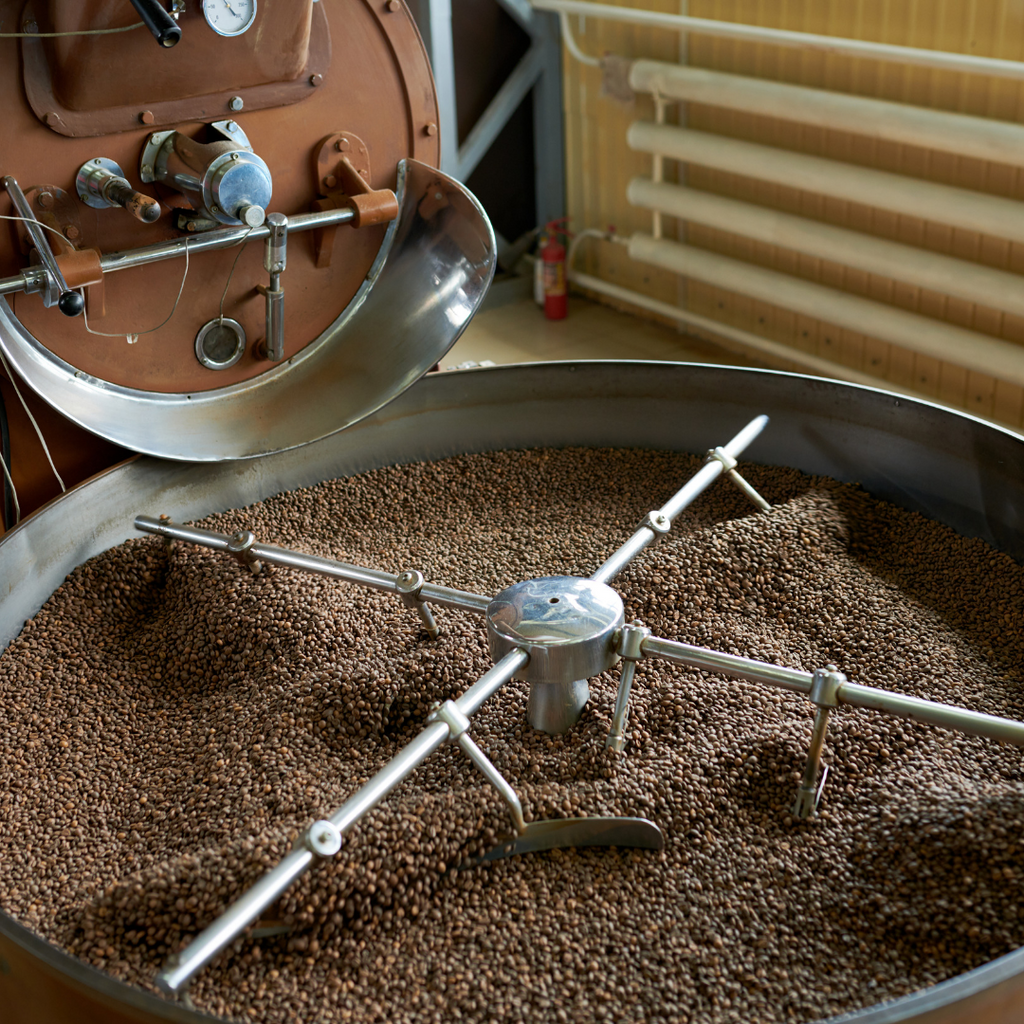
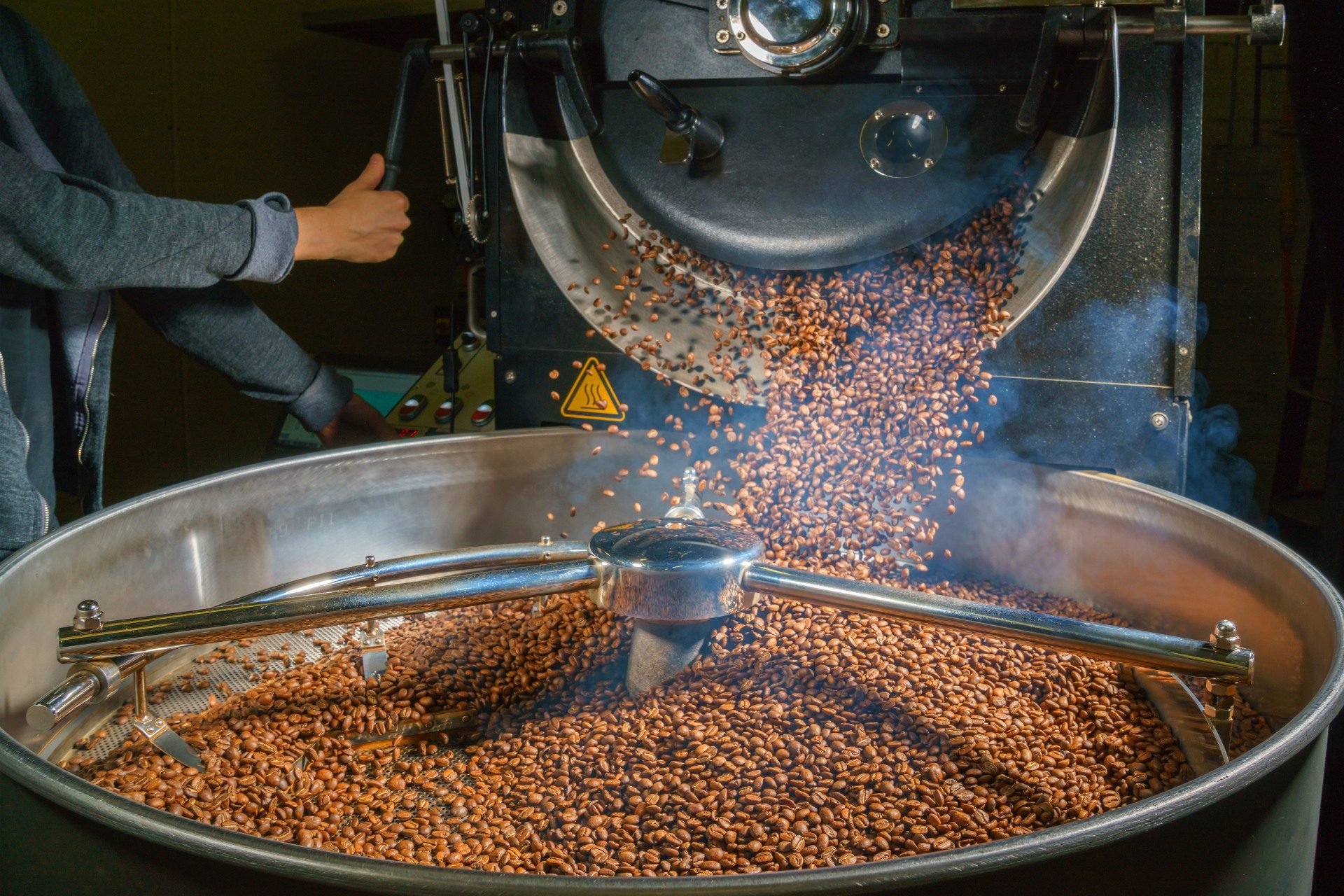
Below is a structured, end-to-end overview of the coffee roasting process, placing each phase in physical, chemical, and flavour context.

1. Green Coffee (Pre-Roast State)
Green coffee beans are:
-
Dense, hard, and moisture-rich (≈10–12% water)
-
Chemically stable and shelf-stable
-
Lacking aroma and flavour associated with brewed coffee
Roasting’s purpose is to transform these beans by applying controlled heat to unlock flavour precursors.
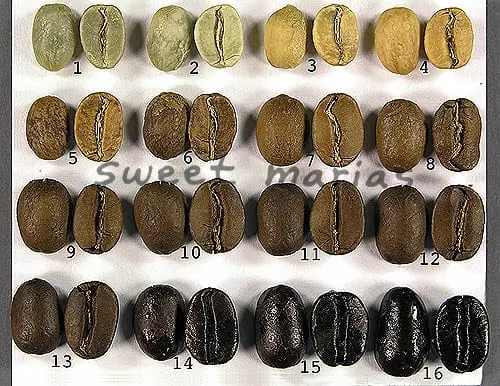
2. Drying Phase (≈ 20–160 °C | 68–320 °F)
What happens
-
Free moisture evaporates
-
Beans warm evenly and turn from green to pale yellow
-
Little aroma beyond grassy or hay-like notes
Why it matters
-
Sets up even heat penetration
-
Too fast → uneven roasts
-
Too slow → baked, flat flavours
This phase is primarily physical, not chemical.
3. Maillard Reaction Phase (≈ 150–190 °C | 302–374 °F)
What happens
-
Amino acids react with sugars (Maillard reactions)
-
Browning begins
-
Aromas shift to bread, toast, nuts, malt
Why it matters
-
This phase creates much of coffee’s complexity and sweetness
-
Time spent here strongly influences body and balance
This is the core flavour-building stage.
4. First Crack (≈ 195–205 °C | 383–401 °F)
What happens
-
Internal water becomes steam
-
Cell walls rupture audibly (“crack”)
-
Beans expand dramatically
-
Roasting becomes exothermic (beans generate heat)
Why it matters
-
Marks the transition from “heated bean” to “roasted coffee”
-
Defines the lower boundary of drinkable coffee
-
Serves as the primary reference point for roast development
Light roasts are often finished at or shortly after first crack.
5. Development Phase (After First Crack)
What happens
-
Sugars caramelise further
-
Acids mellow
-
Oils migrate within the bean
-
Roast character is refined
Why it matters
-
This phase determines roast style
-
Often measured as a percentage of total roast time (e.g. 15–25%)
Too short → sour, underdeveloped
Too long → flat, bitter, ashy
6. Second Crack (≈ 220–230 °C | 428–446 °F)
What happens
-
Cellulose structure breaks down
-
Oils reach the surface
-
Crackling sound becomes sharper and faster
Why it matters
-
Entry into dark roast territory
-
Origin character diminishes
-
Smoke, carbon, and bitterness dominate
Roasts beyond this point prioritise intensity over origin expression.
7. Cooling (Immediate Post-Roast)
What happens
-
Beans must be cooled rapidly (air or tray cooling)
-
Roasting reactions stop
Why it matters
-
Slow cooling continues cooking and degrades flavour
-
Proper cooling preserves intended roast profile
8. Degassing & Resting
After roasting:
-
CO₂ slowly escapes over days
-
Espresso typically benefits from rest (5–14 days)
-
Filter coffee often peaks sooner (2–7 days)
In Summary
The coffee roasting process is a controlled thermal transformation that progresses through:
-
Drying
-
Browning (Maillard reactions)
-
Structural rupture (first crack)
-
Development
-
Optional darkening (second crack)
Each phase influences acidity, sweetness, body, and aroma. Skilled roasting is less about reaching a temperature and more about managing time, heat, and chemical reactions to express a coffee’s potential.
Map roast stages to flavour outcomes
Compare light vs medium vs dark roasts
Explain how roasting differs for espresso vs filter
one-page roast timeline for teaching or publishing
See also ../Home Roasting Skills Brewing & Extraction