Washed Process
title: "Washed Process" tags: [coffee/processing] status: Draft aliases: [] related: []
See also: Coffee Bean Processing
Washed Process
The washed process, also known as the wet process, is one of the most widely used coffee processing methods worldwide. It's particularly popular in regions with access to abundant clean water and is prized for producing clean, bright, and consistent coffee flavors.
The washed process is a coffee processing method where the fruit and mucilage are removed using water and controlled fermentation before drying.
Typical characteristics:
- Clean, transparent flavour profile
- Higher perceived acidity
- Clear expression of origin and varietal
Step-by-Step Process
1. Harvesting
Coffee cherries are harvested when fully ripe, typically showing a deep red or yellow color depending on the variety. Selective picking ensures only ripe cherries are processed.
2. Sorting and Cleaning
Freshly harvested cherries are transported to the processing facility and sorted to remove unripe, overripe, or damaged fruit. They're often floated in water channels where ripe cherries sink and defective ones float to the surface.
3. Pulping (Depulping)
Within 24 hours of harvest, cherries pass through a pulping machine that removes the outer skin and most of the fruit flesh. The machine uses pressure and water to separate the pulp from the beans while keeping the parchment layer and mucilage intact.
4. Fermentation
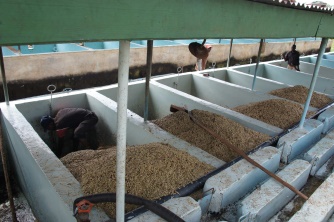
The pulped beans, still covered in sticky mucilage, are placed in fermentation tanks filled with water. This critical stage typically lasts 12-48 hours depending on:
- Ambient temperature (warmer climates = faster fermentation)
- Altitude
- Desired flavor profile
- Specific microorganisms present
During fermentation, naturally occurring enzymes and bacteria break down the pectin in the mucilage layer, making it water-soluble. Monitoring is crucial as over-fermentation can create off-flavors.
5. Washing
After fermentation, beans are thoroughly washed in clean water channels. Workers agitate the beans to remove all remaining mucilage. Multiple rinses ensure complete cleaning, leaving only the parchment-covered beans.
6. Drying
Clean beans are spread on raised drying beds, patios, or mechanical dryers. Sun-drying takes 7-14 days, with beans regularly raked to ensure even drying and prevent mold. The target moisture content is 10-12%. Some producers use mechanical dryers or a combination of sun and mechanical drying.
7. Dry Milling
Once dried, the parchment layer is mechanically removed (hulling). Beans are then sorted by size, density, and defects before being prepared for export.
Flavor Characteristics
Typical Flavor Profile:
- Clean and bright cup
- Higher acidity (often citric or malic)
- Lighter body compared to natural process
- Clarity of origin characteristics
- Floral and tea-like notes common
- Less fruit-forward than natural process
Advantages
- Consistency: More predictable and controllable outcomes
- Quality Control: Defects are easier to identify and remove early
- Clean Flavors: Showcases the inherent characteristics of the coffee variety and terroir
- Lower Risk: Less susceptible to mold and fermentation defects than natural process
- Faster Processing: Shorter total processing time than natural methods
Disadvantages
- Water Intensive: Requires 30-40 liters of water per kilogram of coffee, raising environmental concerns
- Infrastructure: Needs significant equipment investment
- Wastewater: Produces contaminated water that requires proper treatment
- Labor: More labor-intensive than natural processing
- Location Dependent: Not suitable for areas with water scarcity
Regional Variations
Central America: Traditional fermentation tanks, often with careful monitoring and washing Colombia: May use mechanical mucilage removers (desmucilaginadores) to reduce water use Kenya: Double fermentation and washing for exceptionally clean cups Rwanda: Extensive washing channels and soaking to achieve brightness
Environmental Considerations
Modern washed processing facilities increasingly focus on:
- Water recycling and conservation systems
- Wastewater treatment through wetlands or biodigesters
- Mechanical mucilage removal to reduce water consumption
- Converting coffee pulp waste into compost or biofuel
Best Suited For
- Highlighting delicate, nuanced flavor characteristics
- High-altitude coffees with complex acidity
- Coffees destined for light to medium roasts
- Markets that value clarity and brightness
- Regions with reliable water access and management systems
Related notes:
Wet Process · Wet Mill · Fermentation · Acidity · Terroir