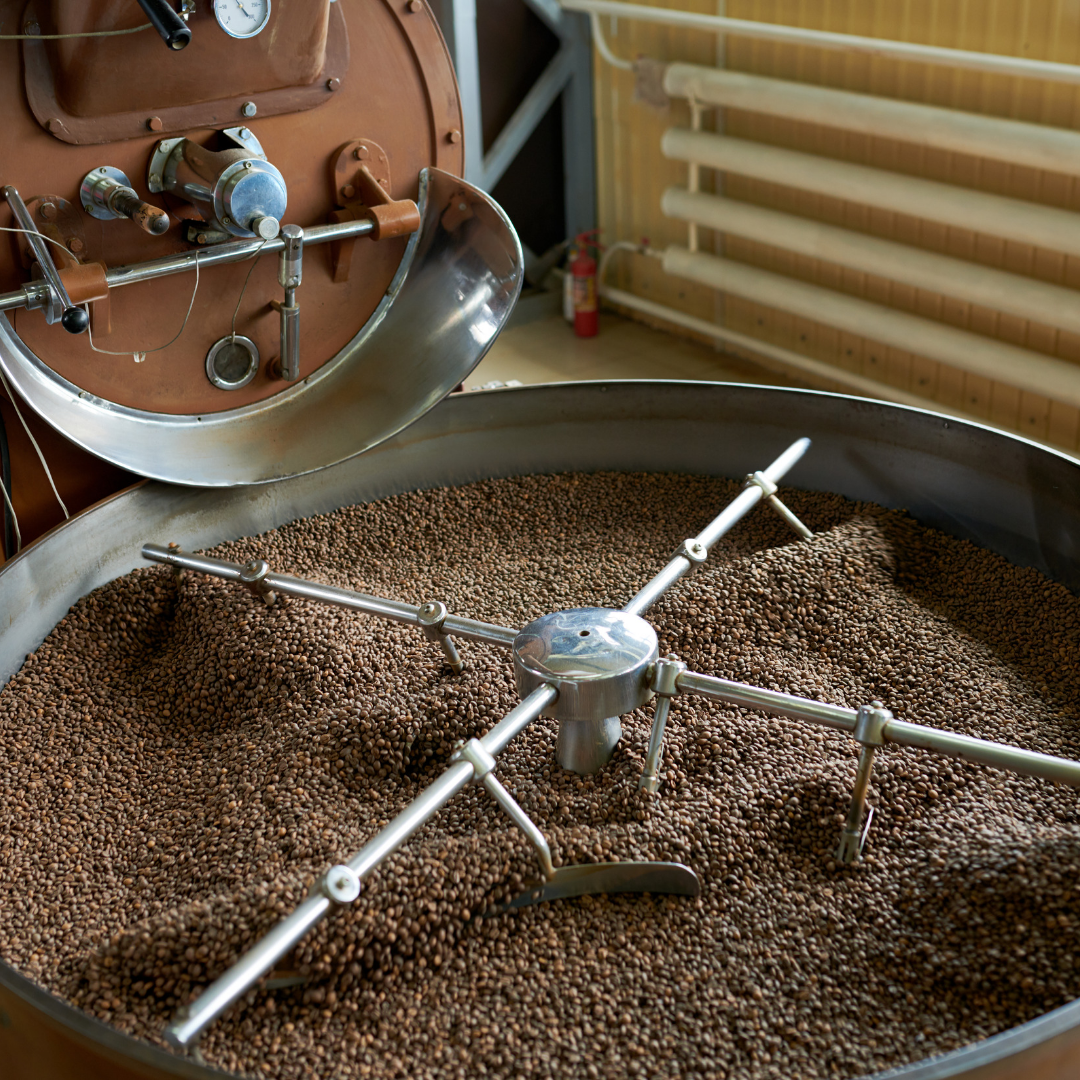
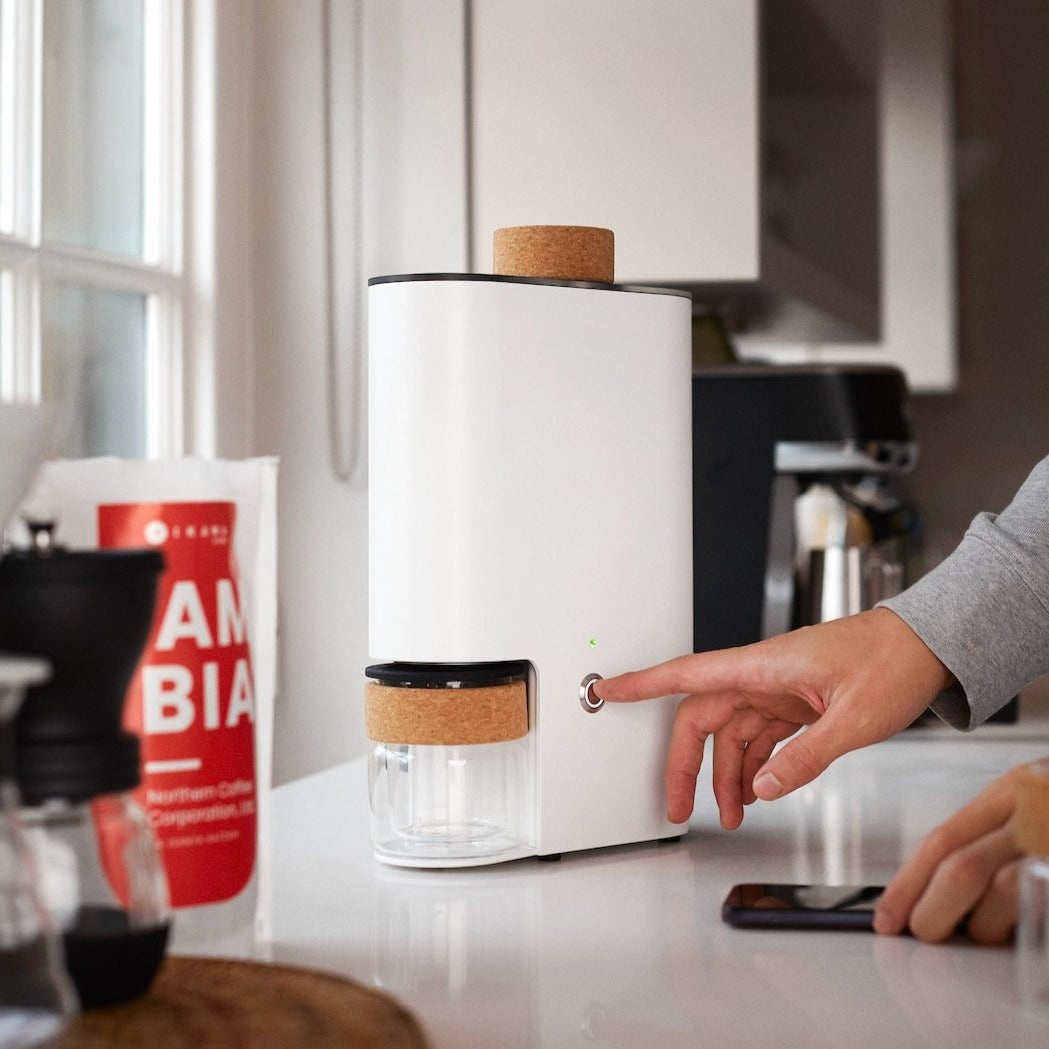
In this section, we give an overview of coffee roasters, covering what they are, how they work, the main types, and how they differ in outcomes and use cases.
What is a coffee roaster?
A coffee roaster is a machine that applies controlled heat and airflow to green coffee beans to drive the physical and chemical transformations that create roasted coffee.
At a high level, all roasters manage the same variables:
-
Heat input
-
Airflow
-
Bean movement
-
Time
Different roaster designs prioritise these variables differently, leading to distinct roasting behaviour and flavour outcomes.
Core functions of any coffee roaster
1. Heat application
- Raises bean temperature in a controlled manner
- Delivered via gas, electricity, or infrared energy
2. Bean agitation
- Keeps beans moving to avoid scorching
- Ensures even heat exposure
3. Airflow management
- Removes chaff and smoke
- Influences heat transfer and flavour cleanliness
4. Monitoring & control
- Temperature probes (bean temp, exhaust)
- Manual or software-driven control systems
Main types of coffee roasters
1. Drum roasters
2. Fluid-bed (air) roasters
3. Hybrid roasters
4. Sample roasters
5. Home coffee roasters
Key comparison table
| Roaster Type | Heat Transfer | Control | Typical Flavour |
|---|---|---|---|
| Drum | Conduction + convection | Moderate–High | Sweet, balanced |
| Fluid-bed | Convection | High responsiveness | Clean, bright |
| Hybrid | Mixed | Very high | Flexible |
| Sample | Mixed | Limited | Diagnostic |
| Home | Varies | Simplified | Variable |
Scale of coffee roasters
Home
-
100–300 g
-
Electric
-
Manual or semi-automated
Small commercial
-
1–15 kg
-
Gas or electric
-
Artisan specialty roasting
Industrial
-
30–120+ kg
-
Fully automated
-
Consistency and throughput focused
Why roaster choice matters
The roaster does not determine quality on its own, but it strongly influences:
-
Rate of heat application
-
How evenly beans roast
-
How forgiving the system is to error
-
The range of achievable flavour styles
Good roasting is the result of:
Skilled heat management × appropriate machine design
Teaching summary
Coffee roasters differ primarily in how heat is delivered and controlled.
-
Drum roasters favour sweetness and balance
-
Fluid-bed roasters favour clarity and brightness
-
Hybrid roasters maximise flexibility
Understanding roaster design helps explain why the same coffee can taste different when roasted on different machines, even with similar roast levels.